
Greensville Property Value Types
Three records can answer a Greensville property value question, and they rarely agree. Assessed value comes from the local assessment system the county uses for its tax roll. Market value is a separate estimate. It reflects what the parcel might sell for under stated conditions. Recorded consideration is whatever amount or other value a conveyance states. The instrument must disclose one at all. Each number answers a different question. The table names the source to check and the limit attached to each figure.
| Value measure | Meaning | Record source | Limit |
|---|---|---|---|
| Assessed value | Value used in the local assessment/tax system | Commissioner property card, if displayed | Not a sale quote or appraisal |
| Market value | An estimate of exchange value, not verified in the county page | Separate appraisal or market analysis | Method and Greensville assessment ratio are not published in the sources reviewed |
| Recorded consideration | Amount or consideration stated in a deed, if visible | Recorded conveyance | Past transaction, not current market value |
| Tax bill amount | Charge or payment status tied to a tax account | Treasurer e-services | Not any of the three value measures |
Always cite a Greensville property value with its source, its year, and its field label. A bill balance, a parcel area, or an old sale price should never be passed off as a current estimate.
Greensville Assessed Value Card
The Commissioner of the Revenue says its property card can display summary information and improvements. Sketches and photos may appear when available. Searching works by Owner Name, Parcel Number, or Address. The detailed card sits behind an acknowledgement step. Its exact fields stay unknown from the outside. That means land value, improvement value, total assessed value, tax year, exemptions, and last sale cannot be confirmed from here. Check the live record first. Copy the field label and tax year before using any number. The official card acknowledgement page marks the gateway to the detailed assessment. No sample property is published. No amount or owner of record should be quoted as a Greensville example.
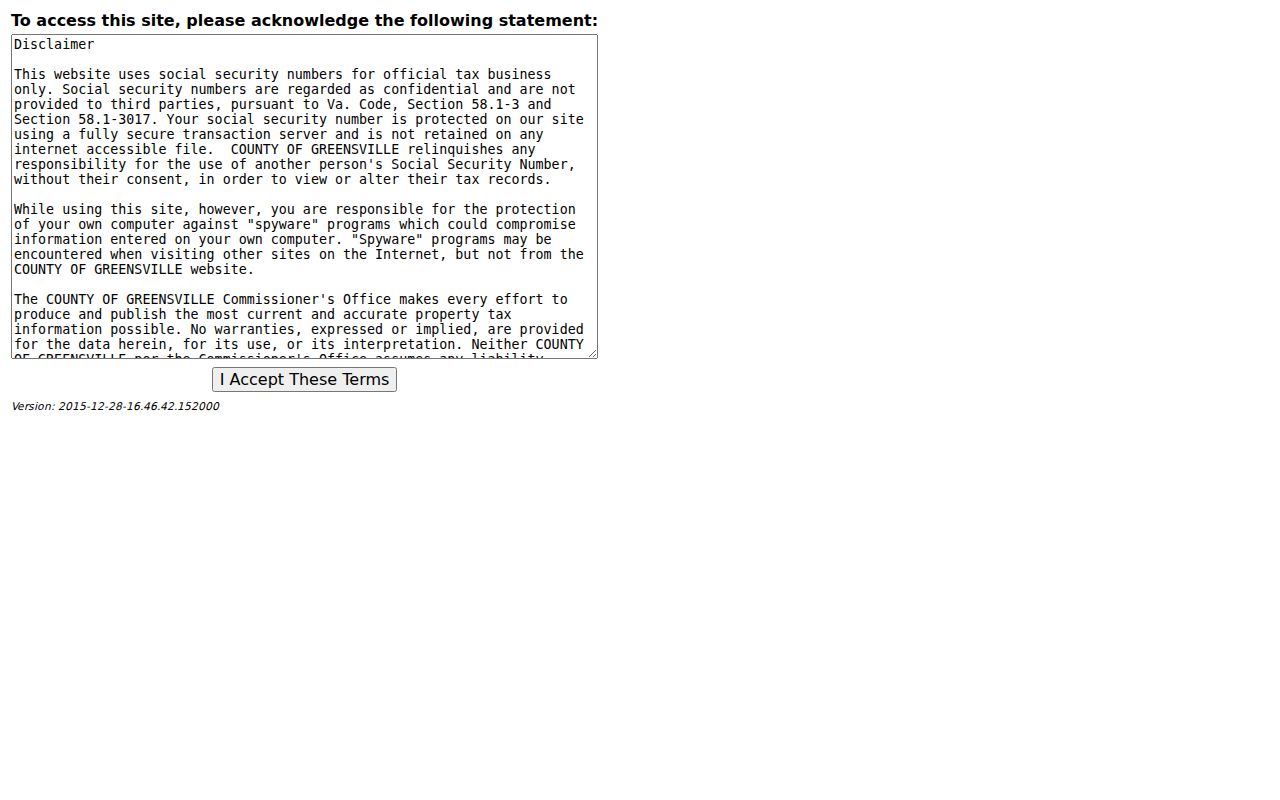
The acknowledgement screen displays no value fields itself. If the online card stays unclear, ask the Commissioner directly about the exact fields.
Greensville Assessed and Market Value
Assessed value is the number the local tax system maintains. This applies if the live card displays it. Market value is a different idea. It estimates a property's likely exchange price in a defined market. Greensville publishes no statement of its assessment level, ratio, or methodology. So treat any conversion guess with caution. Never assume an assessment equals a full market estimate. And never apply a fixed multiplier to bridge the two. A licensed appraiser or a qualified market analysis answers a current sale question. The assessment card answers what the county's system records for tax use. The two can differ because they serve different purposes, dates, and methods. Keep the tax year and any assessor explanation attached to the value. That way a later reader knows what the number means.
Greensville Tax Bill Is Not Value
The Treasurer's real-estate page offers lookups by Name, Department/Bill Number, or Parcel Number. It also shows payment history and yearly taxes paid. Those fields describe a tax account, nothing more. A bill amount can shift with account status, payment timing, or adjustment. The county warns about one catch. An online balance may not reflect items still in transit. None of that establishes market value or deed consideration. Keep the assessment question with the Commissioner and the payment question with the Treasurer. A separate Greensville property tax records resource explains ticket and payment history. For a payoff or a formal tax statement, contact the Treasurer for the current procedure.
Greensville Revaluation Cycle Unknown
The official Greensville pages state no reassessment interval. They also omit the last revaluation year, the assessment ratio, and the level of assessment. They publish no annual value-history field either. Those are local facts to verify with the Commissioner. A neighboring county's calendar or a general Virginia pattern cannot safely fill the gap. For any value comparison, record the card's year. Ask the office when that parcel value was set. Virginia Code Title 58.1 supplies the broad real-property-tax framework. It covers correction of assessments under §58.1-3980 and related provisions. The statute alone does not supply the missing local schedule. Check any appeal timing or evidence requirements with the Commissioner. The card's value tells you what the number means. The tax page covers the bill and review process.
Greensville Recorded Sale Consideration
A recorded deed may state consideration or a sale amount. That figure belongs to its transaction date and its instrument. It does not establish today's market value. Not every instrument shows a simple cash price. A deed of trust records a security interest, not a purchase. A release records satisfaction, not a sale. Read the instrument type and its text. Treat a recorded amount as a comparable sale only then. Virginia SRA/COVERS is the online index route for Greensville land records. Free index-only access may be enabled. The local Clerk controls images and may require a subscription. If the image is gated, ask the Circuit Court Clerk for a copy and the current fee. Keep the deed's recording date and legal description attached. Do this for any price you cite from deed records.
Greensville Land and Improvements
A property card from the Commissioner may show improvements alongside the land. The exact split between land and improvement value, though, is not guaranteed. Building-area fields and history tabs may or may not appear. Note any of them separately, and confirm the tax year before relying on the numbers. Acreage alone never values a place. A large rural tract can swing real value. An older building can too. Limited road access can also swing it in ways a card cannot capture. Remember what the card is: a local assessment record for Greensville. It is not a market appraisal supporting a sale or a loan.
WebGIS helps you see the parcel and the roads around it. Its own public page warns that the mapping is not guaranteed accurate. A drawn polygon is not a survey. Treat it as orientation, nothing more. Boundary and acreage questions belong with the deed, the plat, and the survey process. If a tax assessment seems wrong, ask the Commissioner which review path applies. Ask what evidence the current rules require.
Greensville Exemption Treatment
An exemption changes how a parcel is taxed. It does not change the parcel's size or its recorded sale history. The accessible county card description lists no exemptions, flags, or amounts. So do not assume Greensville offers a senior, veteran, homestead, or owner-use program just because another locality does. Ask the Commissioner which programs exist today. Ask also where an approved exemption shows up on the record.
The tax ticket is a bill. It follows assessment and other tax rules, but it will not display every adjustment behind the numbers. When a value and a bill disagree, ask which local record explains the gap. Save that year with the value. For the bill itself, the Greensville County property tax records resource is the right next stop. Use it as well for any correction route.
Greensville GIS Is Not an Appraisal
The WebGIS map shows location and parcel context. It cannot tell you what a property would sell for. Its public disclaimer is blunt. The mapping is not a substitute for an accurate land survey. Accuracy is not guaranteed. A road, a water feature, or a parcel polygon can help you picture the setting. That is all it is. It is not a valuation and not evidence of a current boundary.
Match each question to its own source. A market decision needs a current appraisal or market analysis. A tax figure needs the live card. It also needs a question to the Commissioner about its year and method. Recorded consideration lives in the deed. Any Greensville property value statement earns trust only when its source and date are clear.